Texaco’s LubeWatch Oil Analysis Programme
Part Two


In the second part of our Texaco LubeWatch Oil Analysis Programme Q&A, we look at how to take coolant samples, how to maintain a healthy lubricating system, the importance of accurate sample information, and more.
Q: How should coolant samples be taken?
A: Most cooling systems operate under pressure to raise the boiling point of the coolant, but hot coolant under pressure can cause severe burns. Therefore, always wait until the temperature is below 50°C (120°F) before removing the radiator cap to avoid injury from hot coolant spray or steam.
The best coolant samples are taken from fluid that represents the coolant circulating through the system during normal operations. However, removal of the radiator cap is dangerous, so always refer to the ‘How to take a coolant sample’ guideline, which can be found on Chevron Business Point (CBP). When collecting these samples, always collect them using the same method and from the same location. If there are any changes in your collection method, notify the lab when submitting the sample.
For those that use a vacuum pump, it is best practice to use a dedicated pump for coolant sampling that will prevent cross-contamination with oil. Run the equipment long enough for the thermostat to open and mix coolant through the reservoir, then turn off the engine and allow it to de-pressurise – this usually takes 10 to 15 minutes. Never re-use disposable tubing.
To avoid any stagnant coolant or debris contaminating the sample, make sure that valves are flushed through (or for sampling with a vacuum pump, that tubing doesn’t contact the bottom of the radiator). Fill the LubeWatch sample bottle to approximately 3/4 full.
Q: How do you submit samples for testing?
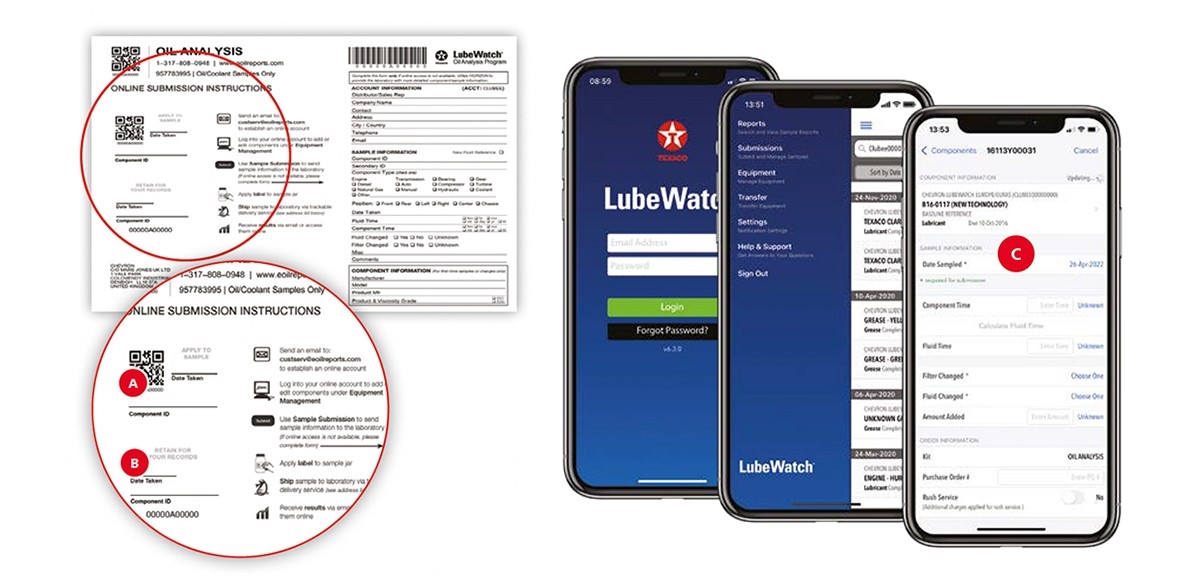
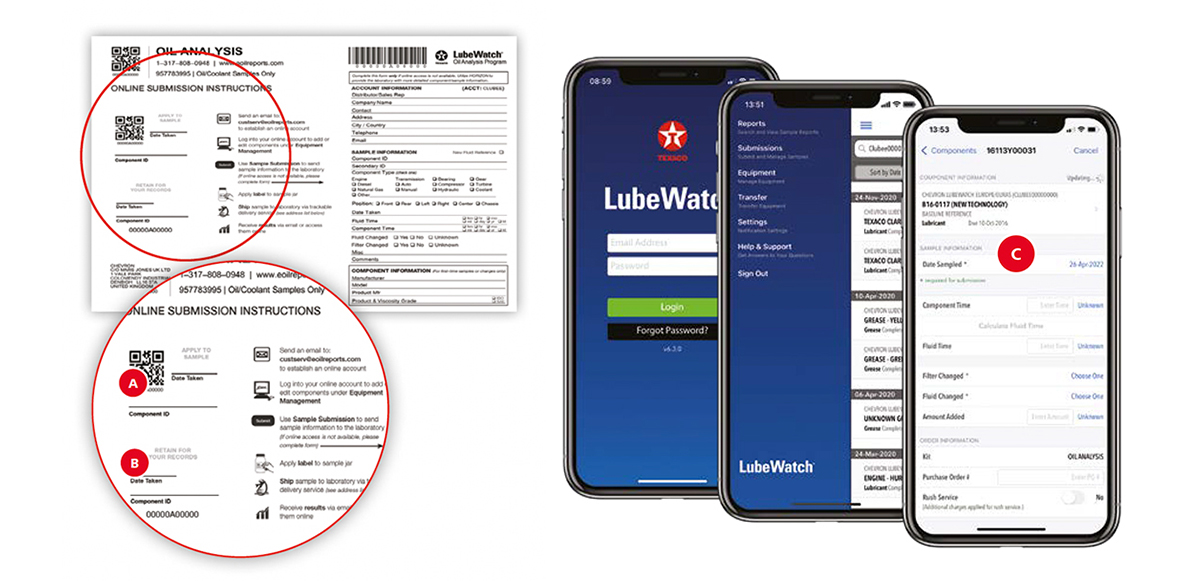
A: For the bottle label, complete the ‘Component ID’ and ‘Date taken’ fields in sections (A) and (B) of the sample label form supplied; peel off the QR coded section (A), and attach it to the sample bottle. Keep section (B) for your records.
Regarding sample information, send it over via the LubeWatch app or online in the ‘Sample Submission’ area of your account (C). If online access is not available, complete the right-hand section of the Sample Label form (D), detach it, and submit it with the sample.
Fill out all equipment and fluid information completely and accurately. For coolants, include the time/distance on both the equipment and the coolant. Once all details have been completed, ship your sample to the LubeWatch laboratory to the address shown on the Sample Label form.
Q: How can you maintain a healthy lubricating system?
A: Fluid monitoring and LubeWatch oil analysis are excellent methods to help track the health of your lubricating system. However, some issues, such as varnish in turbines, can’t usually be detected until it has already formed. Nevertheless, Membrane Patch Colorimetry (MPC) and particle count testing can help measure oil degradation and potential varnish formation. In addition to regular health checks, look for the following signs of varnish and monitor for changes during your routine maintenance:
- changes in oil colour
- increasing temperatures
- visible varnish deposits
On top of this, other tests can be run to monitor the health of your lubricating system.
Q: What is a baseline sample?
A: In some cases, we might ask for a baseline sample to be submitted. A baseline reference sample is a sample of new or unused product submitted to the laboratory. Submitting a baseline sample allows you to gain an understanding of the starting values of the product in use. It is important that the baseline sample being submitted has not been introduced into a system as this can introduce variables such as commingling, contamination or degradation. Ideally, the sample should be pulled from a verifiable source such as a bulk tank, a tote, a pail, or o bottle.
Q: What are the benefits of submitting a baseline sample?
A: It is important to have an understanding of what the starting values are for your lubricant. The original values will provide a more precise prediction of how the used oil sample should be flagged as the lubricant degrades.
Q: Why is accurate sample information important?
A: The information that you provide will help LubeWatch laboratories conduct appropriate tests to consistently evaluate the used oil or coolant samples and provide targeted recommendations to help improve your overall equipment operational effectiveness. It is therefore important to thoroughly fill out a LubeWatch oil analysis request for all samples – particularly on the initial round.
Careful attention to detail was brought to every aspect of the LubeWatch oil analysis programme development and laboratory evaluation process, with the aim of supporting consistent and insightful data interpretation. Once we’ve created a detailed profile of your work environment, we can start to utilise the predictive capabilites of LubeWatch that can help support your maintenance planning and day-to-day operational reliability.
Q: How can you find out more?